Process control software for electrochemical DLE
EELI integrates inline ionic sensing, electrode state estimation, and closed-loop potential control into a single supervisory layer that runs above your existing PLC and SCADA.
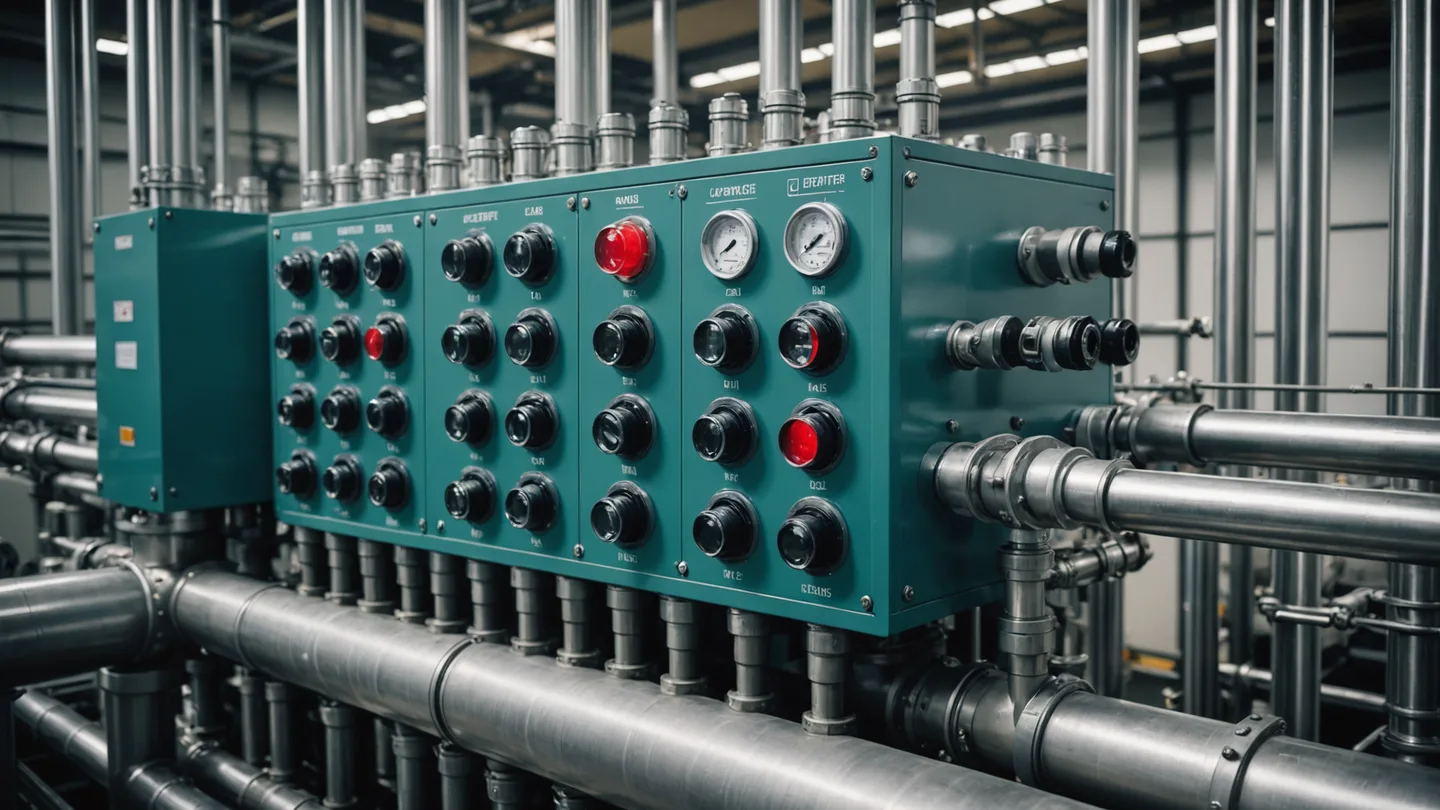
One control layer, three operating modules
EELI connects to your existing electrode infrastructure without replacing the control architecture you depend on for safety and emergency response. The supervisory layer adds adaptive setpoint management on top of what you already have.
The three modules work in sequence: upstream sensors feed the predictive compensation model, the state estimator tracks electrode loading in real time, and the cycle optimizer pushes updated potential setpoints to the PLC at each phase boundary.
| Brine feed Li concentration | 418 ppm |
| Electrode stack potential | +0.41 V |
| Li+ loading fraction (Stack A) | 79% |
| Cycle phase | Intercalation |
| Recovery rate (last cycle) | 88.4% |
| Fouling indicator | Normal |
What EELI does at the electrode level
Each capability addresses a specific failure mode in fixed-setpoint DLE operation. Together they form a closed feedback loop that keeps cycle efficiency near its thermodynamic ceiling across variable brine chemistry.
Electrode state estimation
On-stack electrochemical impedance measurements feed a continuous model of Li+ loading fraction in the intercalation material. The state estimate updates every 30 seconds, enabling mid-cycle potential adjustments rather than waiting for cycle-boundary transitions.
Feed-forward brine compensation
Upstream inline sensors for Li, Mg, conductivity, and pH provide 12-40 minutes of lead time on incoming brine composition changes. EELI pre-adjusts intercalation setpoints before the composition front reaches the electrode stack, maintaining selectivity through feed variability events.
Fouling onset detection
Characteristic shifts in the electrochemical impedance spectrum identify silica or carbonate deposition on the electrode surface before it degrades active area or compresses pore access. Early detection enables targeted rinse cycles rather than unplanned shutdowns for electrode cleaning.
Adaptive cycle timing
Intercalation and elution phase durations are adjusted per cycle based on loading fraction targets and brine chemistry, rather than running fixed timed cycles. Cycle length adapts to actual electrode state rather than a commissioning-era schedule that may no longer match operating conditions.
Recovery and purity optimization
A cycle-level optimizer balances recovery rate against product purity by adjusting elution potential windows and rinse sequencing. Operators set target bounds for both metrics; EELI manages the potential control profile to hold both within acceptable ranges simultaneously.
Process historian and reporting
Every setpoint change, state estimate, and cycle outcome is logged with millisecond timestamps. The built-in historian enables retrospective analysis of recovery trends, fouling events, and brine chemistry correlations without requiring a separate data infrastructure.
Supervisory layer, not a replacement
EELI runs as a supervisory process above your existing PLC. It communicates over standard industrial protocols (Modbus TCP, OPC-UA) and sends setpoint updates to the PLC at cycle boundaries. Your existing safety interlocks, emergency stops, and manual override capability remain fully intact and authoritative.
Most sites complete initial sensor commissioning and control loop handoff within four to six weeks depending on site readiness. The EELI controller does not require internet connectivity for operation; all state estimation and control logic runs on an on-site edge node.
Discuss your integrationSee the platform on your process data
EELI works with DLE operators at the process engineering level. We scope pilot integrations against your brine chemistry and electrode stack configuration, not a generic demo scenario.